INTRODUCING THE KYO-ZABUTON
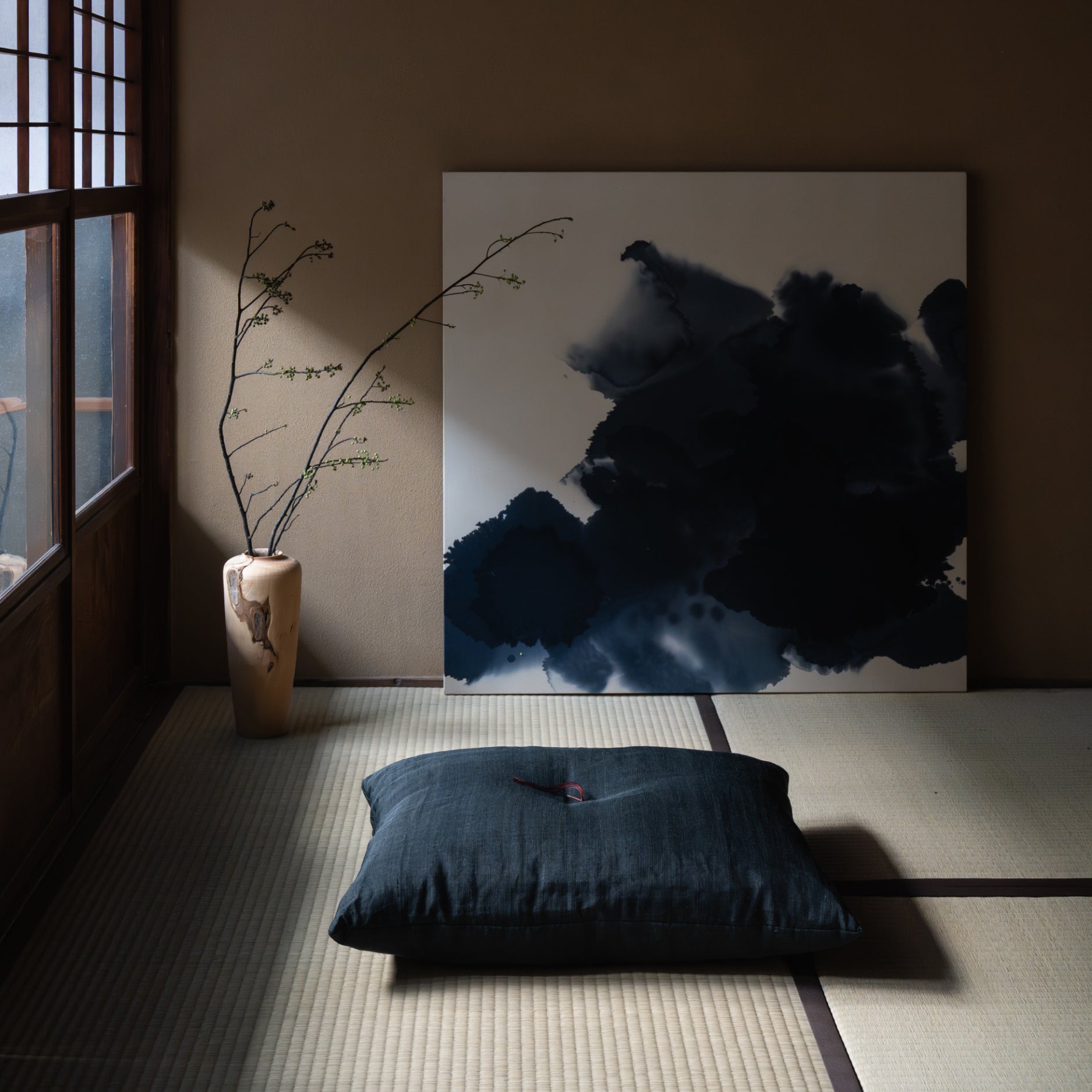
Today, the traditional zabuton cushion, used for comfortable kneeling on tatami mat flooring, is a nostalgic icon of Japanese home life. Central to gatherings of families and friends across Japan, the zabuton cushion was a central feature at meal times and when playing games, but mostly when relaxing.
However, this image of domesticity belies its history as a symbol of power, often used to indicate the most important person in any room. Whilst the historical account of zabuton cushions is sparse, they are believed to have evolved from their straw-fashioned cousin, the shitone cushion (茵), which was once only used by people of great status: members of the imperial court and the most revered Buddhist monks.
As cotton cultivation boomed in Japan, the material became accessible to the ordinary classes. The cotton-filled floor cushions that we know today as zabuton quickly rose in popularity, assuming its position as an iconic household object. Their prominence within the Japanese home, however, began to fade as western-style flooring rose in prominence, both as an economical and low-care alternative to tatami mats.
Family-owned business Takaokaya have been handcrafting zabuton cushions in Kyoto for generations. From a signifier of power to a symbol of the everyday, Takaokaya’s kyo-zabuton carries on the legacy of its predecessors through its precise form and construction.
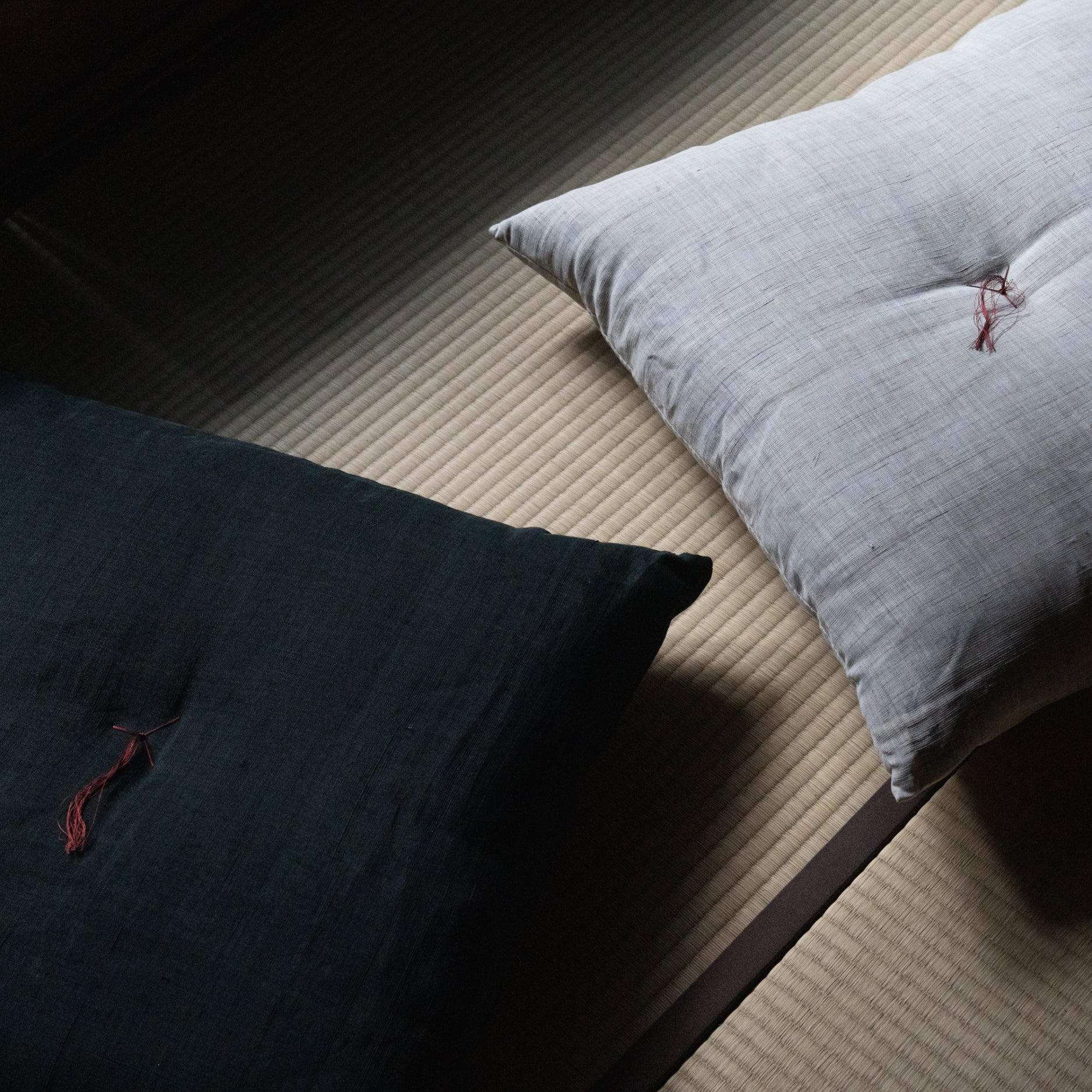
Hand-cut cotton fabric, carefully stuffed to ensure long-lasting comfort, is secured with a distinctive Y-shaped embroidery and tassel atop the cushion. This embroidery not only maintains even distribution of cotton filling within the cushion but also creates a ‘front’ and ‘back’ — a feature that remains from its historical use in meetings with high-ranking officials.

TAKAOKAYA AND THEIR MISSION OF 'KANGU'
“Takaokaya began when my grandfather started making futons here in 1919. That was the beginning, and for over 100 years since then, we have continued to make zabuton and futons in this very place.”
Established in Kyoto in 1919, Takaokaya is proud to both draw from and contribute to the vibrant and historied textile industry in the city. They began their story as producers of traditionally-made futons. This origin has resulted in a century of accumulated skill and careful practice that they now use when hand-making zabuton cushions, a close relation to the futon.
Takaokaya believe that within their practice, craftsmanship and comfort should be held as equally reverent. They chose to honour the company’s recent centenary by coining the term ’Kangu’ 寛具. A combination of the kanji 寛 (‘relax’ or ‘generosity’) and 具 (‘tool’ or ‘utensil’), to generally mean ‘relaxation tool.’ ‘Kangu’ speaks to the essence of their practice and products, and as a testament to their mission of creating comfort. 
FORM AND FUNCTION: EXPERTS IN EXECUTION
Executing the ideal, minimalist expression of the kyo-zabuton requires great skill. As is emblematic of Japanese craftsmanship, Takaokaya uphold exacting parameters within their own craft practice to ensure deep comfort for their audience — especially given the many years of daily use that kyo-zabuton are expected to undergo.
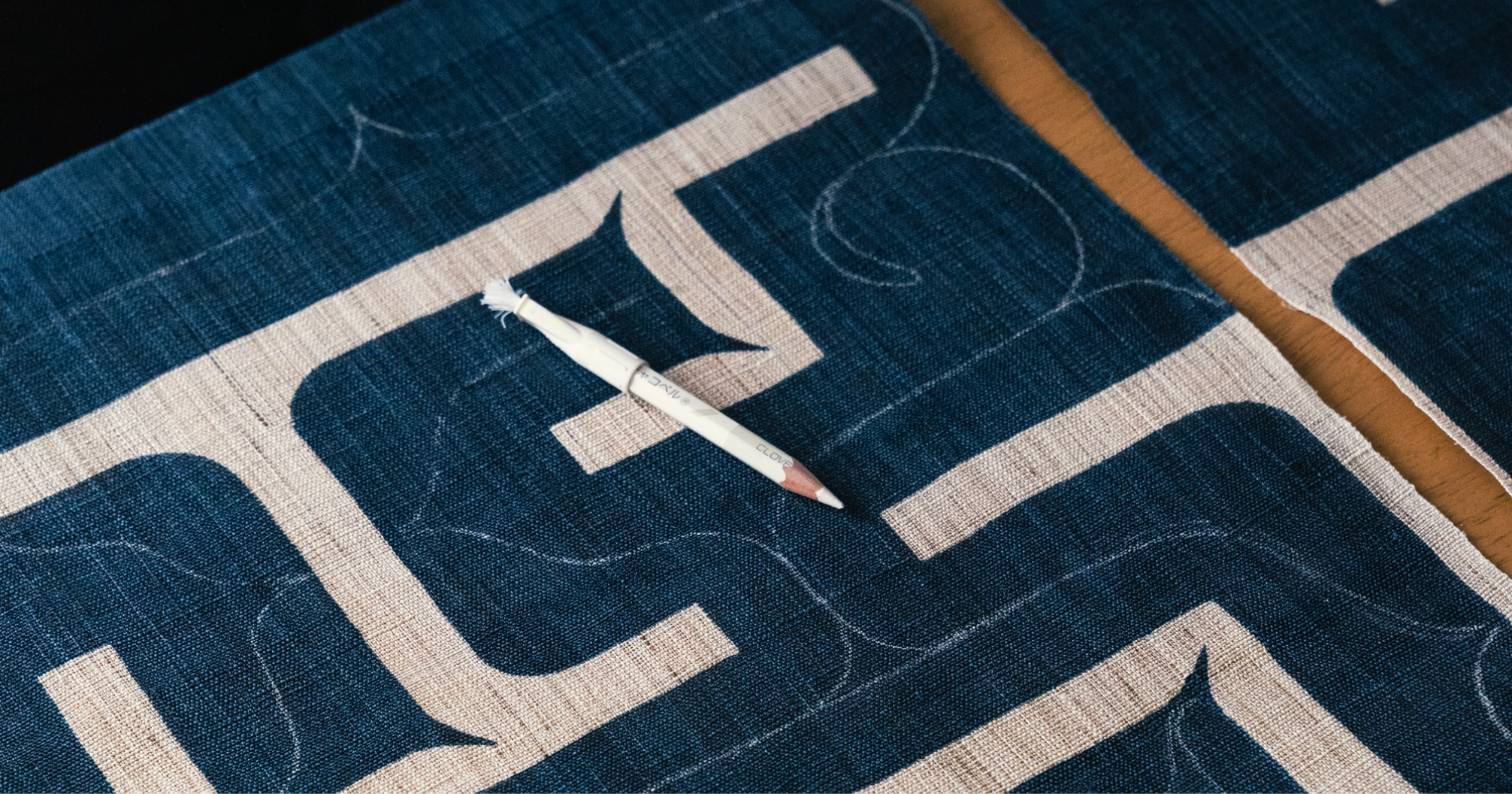
Comfort begins with the cushion’s curved form. The kyo-zabuton features a flat underside and dome-like top side, said to be reminiscent of the shape of the Japanese fish cake, kamaboko (蒲鉾). Hand-cutting the fabric of the zabuton, to accommodate each cloth’s specific thread count and weave, is followed by the meticulous sewing together of the separate pattern pieces; even a few millimetres off could destabilise the final build. Expertly executed kuke stitching, a japanese hand-stitching technique, creates invisible seams and a flawless finish.
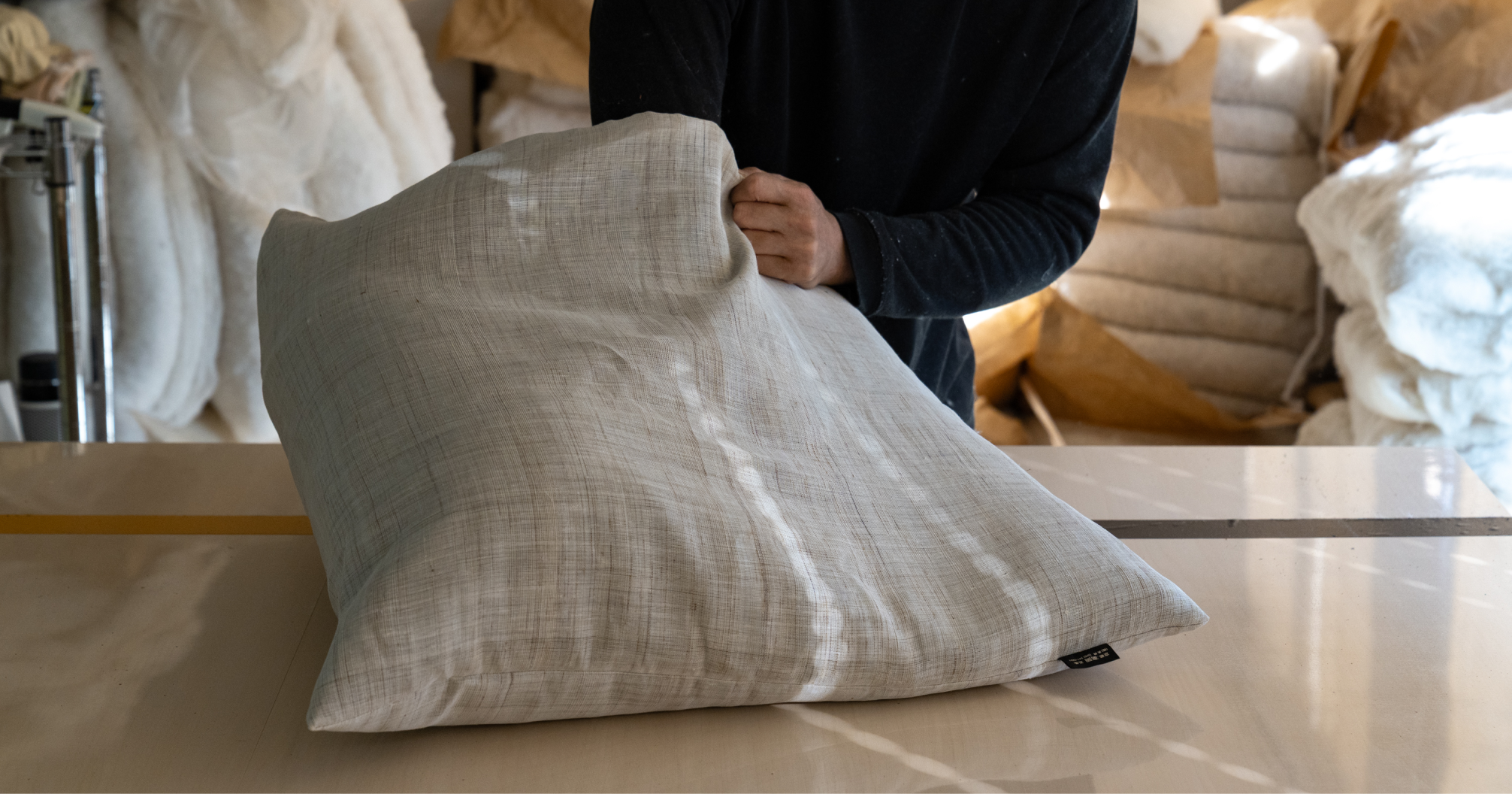
Cotton stuffing is then shaped and folded by hand as it is inserted into the cushion cover, a pivotal stage of construction. Inadequate or irregular stuffing will compromise the comfort and longevity of the final piece.
Working by hand allows for Takaokaya’s craftspeople to respond to the unique sensitivities of each natural material used during construction. This creates a uniformity of performance among the cushions that could not be achieved through mechanised production.

PRESERVING ICONS OF JAPANESE DESIGN
In recent decades, as tatami mats in Japanese homes have decreased in popularity, so has the regular use of zabuton cushions. The practice of gathering with friends and family, kneeling on zabuton in the traditional style, is a cultural practice that is at risk of disappearing.
Takaokaya and their craftspeople are working to preserve this iconic symbol of Japanese domestic life whilst acknowledging the shifting needs of contemporary living spaces. To accommodate the changing times, Takaokaya and POJ Studio have collaborated in designing a kyo-zabuton that works both in its original context as traditional seating as well as a modern decorative cushion in any space.